14K Gold Fill vs. The Rest: The Smart Shopper’s Guide to Lasting Jewelry
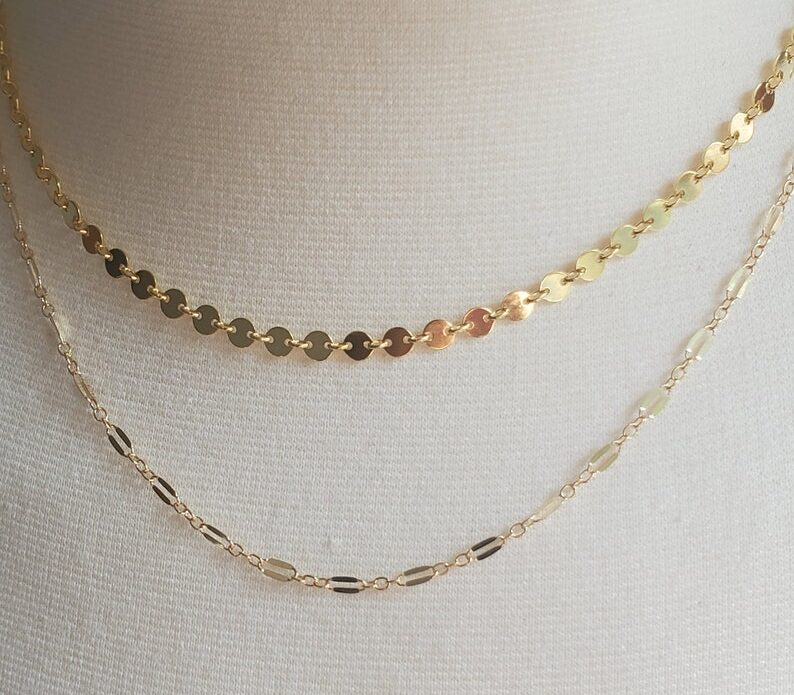
With the rising price of gold these days, there’s no better time to consider 14K Gold fill! What is it, how is it made, how should I care for it, and most importantly, why would I want it? I will cover all these questions and more in this article – as well as cover some of its competitors in the market today!
What is 14K Gold fill?
14K Gold fill is a thick layer of solid 14K Gold bonded with heat and pressure to a base metal core – usually brass. The layer of solid gold is 100 times thicker than plated gold making it the next best thing to solid gold at a fraction of the price. In addition to being cost effective, 14K Gold fill looks, feels, and wears like solid gold and when properly cared for can last decades.
The best way to care for 14K Gold fill is to keep it clean and protect it from scratches. To clean, we recommend swishing lightly in a solution of warm water and mild dish detergent. If needed, an old soft toothbrush can get between links if you get splashed with chocolate 😉 You can also use a pearl safe jewelry cleaner just be sure to rinse it well with warm water. For daily cleaning, a lightly dampened microfiber or eyeglass cloth will remove body oils and give your jewelry a slight buffing. Be sure to allow your jewelry to dry completely before storing.
To prevent scratches, a soft jewelry bag will keep your jewelry from rubbing up against your other pieces. You can also use drawer organizers to separate your jewelry – they are readily available from Amazon and other large retailers and are often lined with a velvet type fabric between sections. You prolong the life of your jewelry by keeping it away from bleach, cleaning products, pools and spas. Metal is waterproof but chemicals in the water or cleaning products can damage the finish of 14K Gold fill. Bleach has been known to eat away at gold as well as some people’s body chemistry if highly acidic.
The Contenders: How Other Finishes Stack Up
As you shop for beautiful, budget-friendly jewelry, you’ll encounter a variety of alternative options. Understanding how they differ from 14K Gold fill is essential for building a long-lasting collection.
Gold Vermeil
Vermeil is a high-quality alternative consisting of a thick layer of gold electroplated over a base of solid sterling silver. While it sounds premium, the gold layer is relatively thin compared to gold fill, typically ranging from 2.5 to 5 microns. Because it sits on silver, it is great for sensitive skin, but the silver base can oxidize, and the gold layer will eventually wear away with frequent, everyday wear.
Gold Plated Stainless Steel
Stainless steel is an incredibly durable and waterproof base metal, making this option highly resistant to bending, scratching, and rusting. When a layer of gold is bonded to the surface (often via physical vapor deposition, or PVD), it becomes a highly resilient, tarnish-proof, and budget-friendly piece. However, the actual gold coating is extremely thin, meaning it acts more as a surface color rather than a lasting layer.
18K Gold Fill
While it may sound like an upgrade, “18K Gold fill” can be a bit of a misnomer. Under strict United States regulations, gold-filled jewelry is legally required to be at least 5% gold by total weight, and it is mechanically pressure-bonded as an alloy. True 18K gold-filled pieces are incredibly rare; instead, this label is frequently used in the market to describe lower-quality, overseas flash-plating over a base metal.
Gold Plated Brass with E-Coating
This is a staple in the fast-fashion jewelry industry. It features a base of budget-friendly brass coated in a very thin layer of gold. To prevent the gold from wearing off immediately or the brass from tarnishing, an “e-coating” (a clear, protective lacquer) is applied via an electrical bath. It looks great initially, but once that micro-thin protective coating or the gold layer scratches off, the underlying metal will quickly oxidize and expose the wearer to the raw base metal.
14K Gold Fill vs. The Alternatives
| Jewelry Type | Composition | Durability & Lifespan | Pros | Cons |
|---|---|---|---|---|
| 14K Gold Fill | Thick layer of 14K gold pressure-bonded to a brass core | Decades | Looks and feels like solid gold, highly resistant to wear, tarnish-resistant, affordable | Higher initial cost than flash-plated options |
| Gold Vermeil | Thick gold layer applied over sterling silver | 1 to 5 years | Genuine gold over a precious metal base (silver), hypoallergenic | Gold layer wears off faster than gold fill, silver base can tarnish over time |
| Gold Plated Stainless Steel | Thin gold layer over a stainless steel core | 1 to 3+ years | Highly resistant to water and scratching, affordable | Gold layer is very thin, wears away to steel over time |
| 18K Gold Fill (Imported/Varies) |
Varies; often thin gold flash-plating over base metal | Months to a few years | Cost-effective, visually resembles higher-karat gold | Often just heavy plating rather than a true mechanical bond, prone to wear |
| Gold Plated Brass with E-Coating | Very thin gold on brass, sealed with clear lacquer | Weeks to months | Very inexpensive, e-coat temporarily prevents tarnish | Once the thin gold and e-coat scratch, the piece will quickly tarnish |
The Verdict
When looking for that luxurious, radiant gold aesthetic, evaluating the longevity of your investment is everything. While gold plated and vermeil pieces serve a great purpose for short-term wear or trendy, occasional accessories, their fragile, microscopic layers of gold cannot compare to the heavy, heat-and-pressure bonded durability of 14K Gold fill. By offering a genuine layer of gold that is 100 times thicker than standard plating, 14K Gold fill stands out as the ultimate, cost-effective choice for building a jewelry collection that will gracefully stand the test of time.